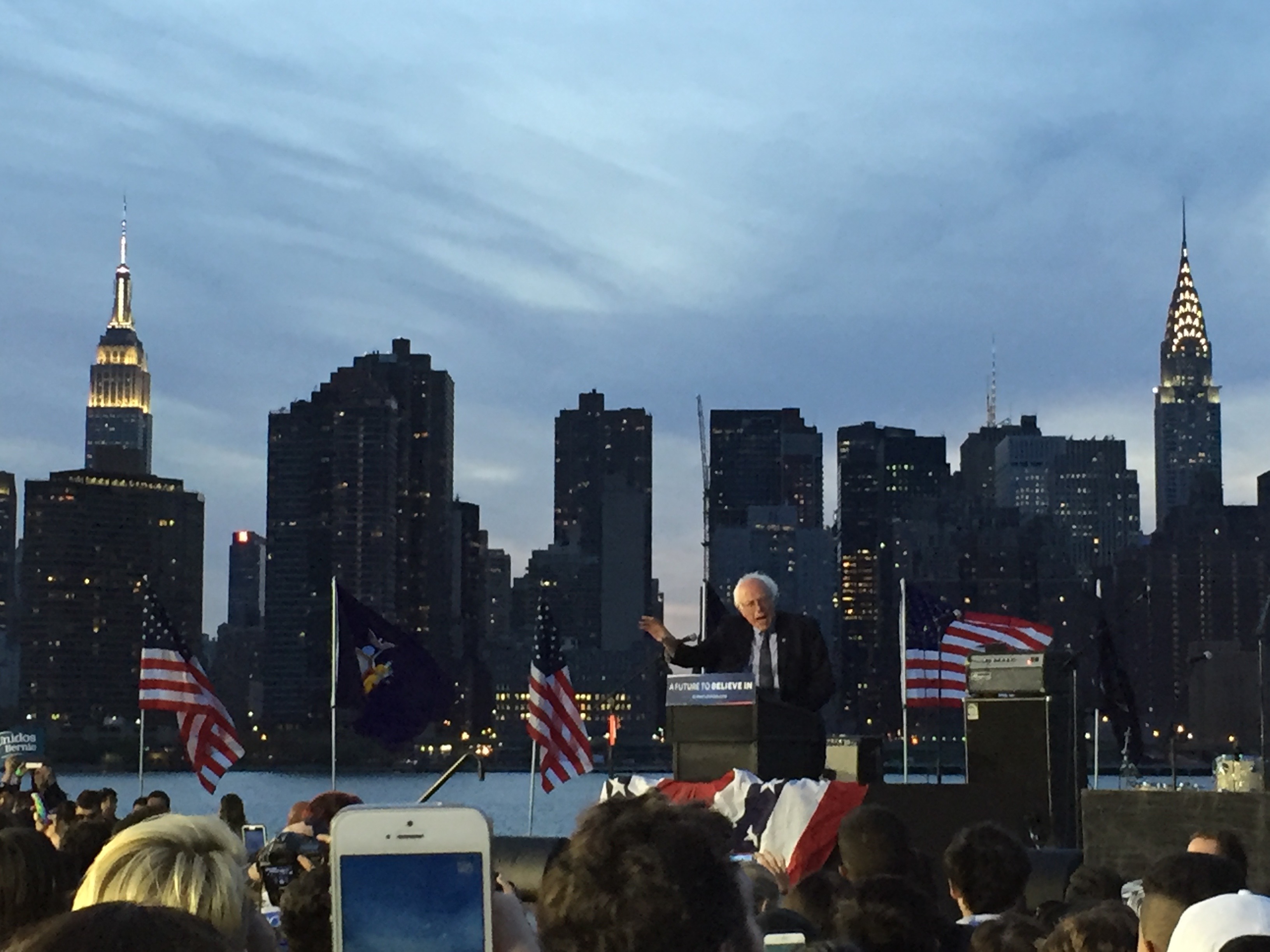
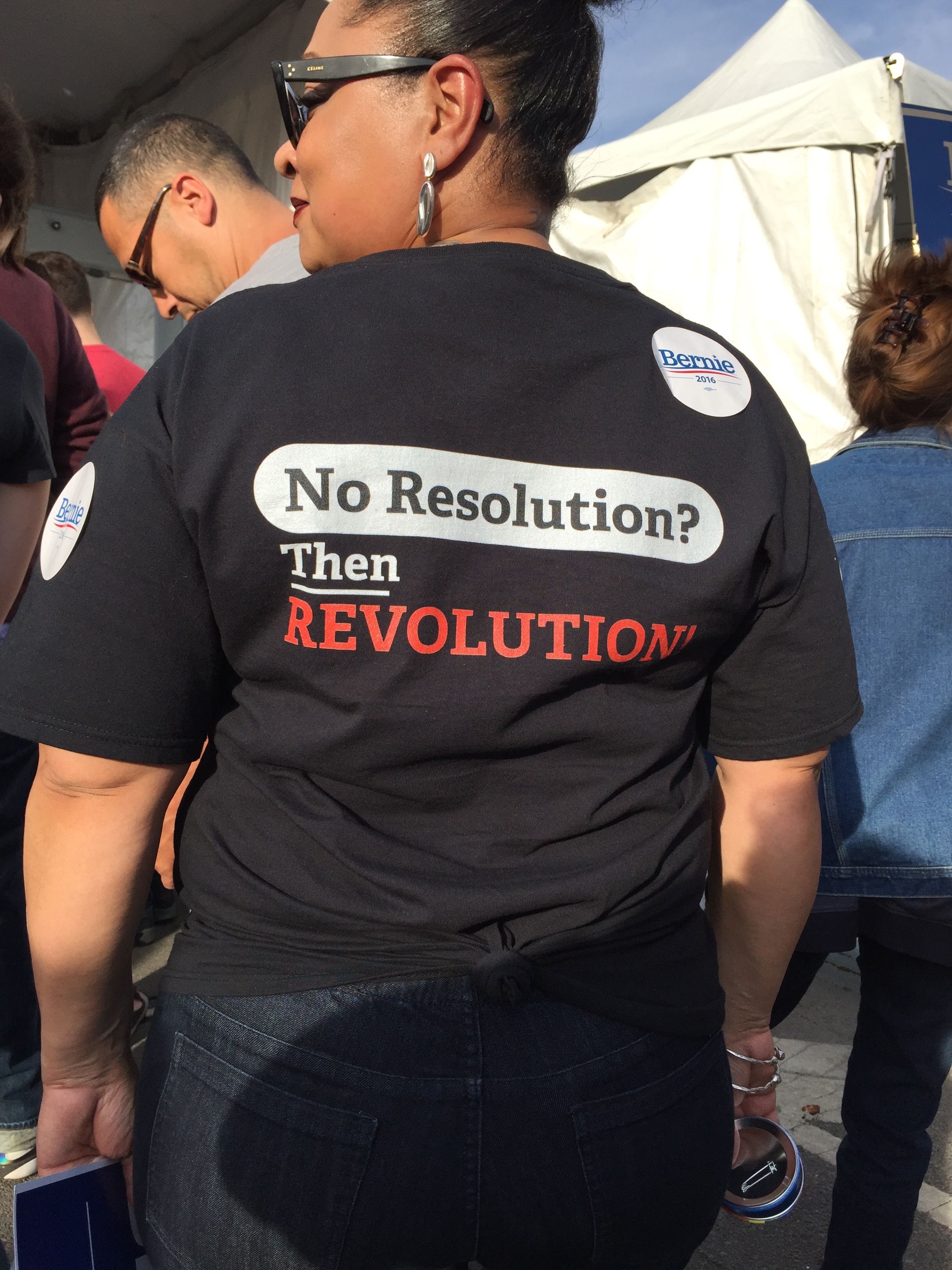
60年代の黒人解放運動を通して「Black is Beautiful」と自尊を訴え、70年代にはアリサ・フランクリンが「I'm Gifted and Black(私は才能があって黒人)」と歌った意味を、日本社会では知る必要がなかった。対してハイチの父と日本の母の間に生まれた大阪選手は自分が白く描かれたことに関して「なぜみんなが怒っているのかはわかる」と、もちろん理解していました。
「白人」の「男性」の「異性愛者」はアメリカ社会で常に歴史の主人公の立場にいました。彼らはすべての文章の中で常に「主語」の位置にいたのです。そうして彼ら「主語」が駆使する「動詞」の先の「目的語(object=対象物)」の位置には、「黒人」と「女性」と「同性愛者」がいた。彼らは常に「主語」によって語られる存在であり、使われる存在であり、どうとでもされる存在でした。ところが急に「黒人」たちが語り始めるのです。語られる一方の「目的語=対象物」でしかなかった「黒人」たちが、急に「主語」となって「I Have a Dream!(私には夢がある!)」と話し出したのです。続いて「女性」たちが「The Personal is Political(個人的なことは政治的なこと)」と訴え始め、「同性愛者」たちが「Enough is Enough!(もう充分なんだよ!)」と叫び出したのです。
8月16日、全米の新聞社の3割にあたる300社とも400社とも言われる新聞媒体がトランプの一連のメディア攻撃を批判する社説を一斉に掲載しました。ことあるごとに自分の意に沿わないニュースを「フェイク・ニュース!」と断じ、7月20日のNYタイムズのA.G.ザルツバーガー発行人(38)との会談では「フェイク・ニュース」ジャーナリストを「国民の敵 Enemy of the People」とまで言ったトランプに対し、ボストン・グローブ紙が呼びかけたこの対抗運動のSNS上でのハッシュタグは「#EnemyOfNone(誰の敵でもない)」です。
その兆候が7月31日のフロリダ・タンパでのトランプのMAGA(Make America Great Again)集会でした。そこでCNNのホワイトハウス担当キャップであるジム・アコスタが現場リポートをしようとしたところ、その中継が「CNN SUCKS(CNNは腐ってる)」の罵声で囲まれました。「FUCK the MEDIA(メディアをやっつけろ)」のTシャツを着た人、「Tell the truth!(本当のことを言え!)」と叫ぶ人たちの中で「Q」という文字の付いたキャップやTシャツを着ている人たちも目立ちました。中には大きく「Q」と切り抜いたプラカードを掲げている人もいました。
ジャーナリズムへのこの執拗な攻撃、政権による特定メディアへの名指しの非難。なんだか日本でも同じことが起きているので気持ち悪くなるのですが、そういえば2016年11月、トランプ当選が決まってすぐにトランプタワーに彼を表敬訪問した安倍首相、自分とトランプとの共通点だとして言ったセリフが「あなたはNYタイムズに徹底的にたたかれた。私もNYタイムズと提携している朝日新聞に徹底的にたたかれた。だが、私は勝った…」でした。大統領首席戦略官となるスティーヴ・バノンは安倍を指して「Trump before Trump(トランプが登場する前のトランプ」と形容したそうです。
タンパ・ベイ・タイムズ紙の演説書き下ろしによるとそれは次のような、文脈不明の「17」の羅列でした。
You know(なあ), I told the story the other day(この話は前にもしたんだが), I was probably in Washington in my entire life 17 times(人生でワシントンに言ったのは多分17回だ). True(マジで), 17 times(17回). I don’t think I ever stayed overnight(泊まったことはないと思うが)… Again(もう一度言うが), I’ve only been here about 17 times(17回だ、あそこに行ったのは=【訳注:タンパにいるのにワシントンのことを here って、「ここはどこ?」状態なんでしょうか?】). And probably seven of those times was to check out the hotel I’m building on Pennsylvania Avenue(で、おそらくその中の7回はペンシルベニア・アベニューに建てているホテルの様子を見に行ったんだ=【訳注:これも時制がおかしいわ】) and then I hop on the plane and I go back(行ってもすぐに飛行機に乗って帰ったがな=【訳注:同前】). So I’ve been there 17 times(だから、行ったのは17回だ), never stayed there at night(泊まったことは一度もない). I don’t believe(ないと思う).
For weeks, Sugita’s party seemed to condone her views. But the Japanese people and even the self-censoring media are not letting this one slide, and now even within the LDP there have been angry and pointed exclamations of disgust.
「杉田の党は数週間にわたって彼女の見解を問題視しないでいたが、日本人およびセルフセンサリング・メディア(政権批判を自己検閲する日本のメディア)も今回は見逃さなかった。自民党の内部ですらも怒りと非難の声が上がった」
Currently, roughly 8 percent of the population identify themselves as LGBT. While Japan does not legally recognize same-sex marriage at a national level, local governments, including the Shibuya and Setagaya wards of Tokyo, have used ordinances to recognize same-sex partnerships. Other prefectures are taking similar measures.
「自らをLGBTとする人々は現在およそ8%だが、日本では同性婚は法的に認められず、渋谷や世田谷などの地方レベルで同性パートナーシップが条例で認知されるだけだ」
Beverage maker Kirin, e-commerce giant Rakuten, and some other Japanese corporations are moving ahead with policies to provide the same paid leave for marriage, childbirth, and other life-changing events to same-sex couples. (Note that even Japan’s stodgy corporations are able to conceive something that LDP politicians can’t seem to grasp: yes, even same-sex couples can have children.)
「キリンや楽天など日本の大企業には同性カップルの従業員にも結婚・出産やその他人生の大事なイヴェントにおける有給休暇など福利厚生を拡大している。(注:日本の野暮な企業でさえ自民党の政治家が考えられないこうした事例を考えつける。そう、もちろん同性カップルでも子供を持つことは可能だから)」
The Asahi Shimbun is one of the more liberal newspapers in the country and has been compared to the New York Times. The Asahi is strongly disliked by Prime Minister Abe, who has publicly attacked the paper, and who has in his meetings with President Donald Trump told him, “I hope you can tame the New York Times the way I tamed the Asahi.” Long before Trump was calling the press, “the enemy of the people,” Abe was making effective use of that tactic. (When Steve Bannon called Abe, “Trump before Trump” he wasn’t far off the mark.)
「朝日はニューヨークタイムズに例えられる日本のリベラル紙だ。安倍首相にひどく嫌われている新聞で、彼はこれまでも公然と同紙を攻撃してきた。トランプとの最初の会談【訳注:2016年11月の、当選直後のトランプタワーでの会談】で彼は「私が朝日新聞を飼いならしたようにあなたもニューヨーク・タイムズを飼い慣らせるよう望んでいる【訳注:正確には「あなたはニューヨーク・タイムズに徹底的にたたかれた。私も朝日新聞に叩かれたが勝った。あなたもそうしてくれ」と言ったとされる】」と伝えた。。トランプがメディアを「国民の敵」と呼ぶようになるずっと以前から、安倍はこの戦略を有効に使ってきたのだ。スティーブ・バノン(元大統領首席戦略官)は実際、安倍を『トランプ以前のトランプ』と呼んでいた。その言いはそう間違ってはいない」
Mio Sugita, who was not available for comment, is, like many female politicians welcomed into the LDP, an extreme right-winger and fiercely loyal to Abe. This is important to understand because she is a microcosm of the few women that manage to gain power within the LDP, which has more or less been ruling Japan since the party was founded in 1955. Even when LDP lawmakers are female in gender they are rarely feminists and often echo the sexist and extremist views of Nippon Kaigi, the right-wing Shinto cult, or are members of it. This group helped Abe stage a political comeback after his bumbling exit from power in 2007; most of his handpicked cabinet members belong to the group.
「杉田はコメントを出していないが、自民党に歓迎されて入った多くの女性政治家たちと同様、極端な右翼思想の持ち主で安倍に強烈な忠誠を尽くす。ここを理解することが重要だ。なぜなら彼女は、自民党で権力を握る少数の女性たちのマイクロコズム(小宇宙=縮図)だからだ。自民党の女性政治家たちはジェンダーこそ女性だが、フェミニストであることはまずなく、むしろしばしば性差別主義者で日本会議や神社本庁などの極端な右翼の声を反映し、あるいはそのメンバーであったりする。これらの組織が安倍のカムバックを演出し、安倍は彼らのメンバーから閣僚人事を行っている」
The tone-deaf attitude towards the LGBT community by Japan’s ruling party is part of a pattern of picking on the weak in society, blaming them for being weak and then for society’s wider problems. When people dare to assert they have rights, the LDP pushes back even harder, whether against LGBT people, or foreign workers, or women, or third-generation Korean-Japanese, or the press –– when things go wrong the minorities get blamed.
「日本の支配政党のLGBTへのこの無知な=音が聞こえていない=態度は、日本社会の弱い者いじめ、弱者攻撃のパターンの一部だ。その弱者、少数者たちがより広い社会問題の元凶だと非難するのだ。そういうグループが果敢に権利を主張すれば、自民党の反撃はさらに酷いことになる。LGBTだけでなく、外国人労働者、女性、在日韓国人朝鮮人三世、そして報道機関にすらもそれは向けられる。よくないことが起きればそれはマイノリティのせいなのだ」
Partially blaming LGBT for Japan’s declining birth-rate is not as difficult as addressing the real reasons people don’t have children: a lack of real job opportunities for women, gender inequality, single-parent poverty, the destruction of labor laws so that lifetime employment is a pipe-dream, endemic overtime resulting in (karoshi) people working to death, sexual harassment on the job, maternity harassment. The wealthy old men who run the party don’t have any conception of working hours so long and wages so low that dating is difficult, getting married a challenge, and raising children is impossible. All of this while there is rising poverty as Abenomics fizzles out.
「日本の出産率低下でLGBTを攻撃するのは、子供を持たない本当の理由を解決するよりも簡単だからだ。日本では女性たちの仕事の機会が欠けている。男女格差、性差別、シングルペアレントの貧困、終身雇用制の崩壊、過労死、職場のセクハラ、マタハラ。この政党を運営する裕福な老人男性たちは、労働時間がひどく長くて賃金がひどく低くてデートすることも難しく結婚することはチャレンジで子供を育てることが不可能だということをさっぱり理解していない。これら全てがアベノミクスが立ち消えになろうとする中、立ち現れる貧困の一方で起きていることだ」
そして、結語が次の一文です。
It’s a lot easier to wage a war on LGBT people than it is to wage a genuine war on poverty.
「貧困問題に本当の戦争を仕掛けるよりも、LGBTを叩いている方がずっと簡単なのだ」
ビル・マーというコメディアンが面白おかしく且つ辛辣に政治批評を展開する「Real Time with Bill Maher」というHBOの人気番組があります。先週末のその冒頭は、拍手喝采の中で登場したその彼が「いや、みんななんでそんなにご機嫌なのかわかってるって。ついさっきトランプがアメリカから出てったからね」と口火を切りました。ハワイとアジア歴訪に旅たった大統領を揶揄したものです。「ずいぶん気が楽になった。子供たちをサマーキャンプに送り出した親の気分だ」と。
軽口はまだ続きます。
▼12日間のアジア旅行。トランプに、あんたがいなくなったら一体この国の面倒は誰が見るんだと誰かが聞いたらしいんだが、トランプが言うには「誰だっけ? 俺がいる時には?」
▼訪れるのは中国、日本、フィリピン、ヴェトナム、韓国......トランプの「MAKE AMERICA GREAT AGAIN」の帽子を作ってる国だ。
▼中でも中国は重要だよ。トランプはあそこに壁を視察に行くわけだから。あの壁(万里の長城=the Great Wall)のおかげで、あそこでメキシコ人の姿はもうずっと見ていない。あの壁はすごい。
▼それからヴェトナムだね。彼が昔、徴兵逃れで行かなかった国。それで今度はやっと大統領として行けたわけだ。誰だっけ、ドジャーズが負けたって言ったのは? (ドジャーズは「身をかわす人たち」の意味。つまり「徴兵回避の人たち」。ナショナルリーグの優勝決定戦で負けてワールドシリーズに行けなかったドジャーズに掛けて、実世界のドジャー=徴兵逃れのトランプはちゃっかり負けていないという皮肉)
▼ハロウィーン、子供たちに何を配ったかは知らんが、ロバート・モラーの家では起訴状が配られたね。
▼ニューヨークのテロ。トランプが即座にツイートしてた。「バカで弱腰の大統領のせいでこうなるんだ。あ、ちょっと待て、今の大統領は俺だった」
▼ツイッターの従業員が退職最後の日にトランプのツイッターアカウントを11分間、消した。まあ色々あるが、私はその彼に言いたい。「Thank you for your service! (お務め、ありがとう!)」
その話にもあったロシアゲートですが、今週はマナフォートの次にあのマイケル・フリンが息子ともども逮捕・起訴されるという観測が出ました。ワシントン・ポストはトランプ周辺の計9人が選挙中及び就任移行期間中にロシアと接触したと報じ、大統領は大変な不機嫌の中で旅立ったとされています。そのせいか、エアフォース・ワンの中での同行記者の質問「今や中国の中で権力基盤を固めた習近平は世界で最も力のあるリーダーではないかと言われるが?」に、トランプはムッとしたのか「So am I(オレも同じだ)」と答えたそうです。常に誰かと比較して自分を位置付ける、そういう性格なのでしょう。
2日間にわたる会談を終えて共同記者会見に臨んだトランプは日本の経済を称賛し、そこでアドリブに転じて「I don’t know if it’s as good as ours. I think not, okay?(だが我々の経済ほどいいかはわからない。私は違うと思うよ、オーケイ?)」とすかさず自国民へのメッセージに変えました。
ワシントン・ポストはこの「オーケイ?」をまるで子供にウンと言わせる時の親の口調、と評しています。「And we’re going to try to keep it that way. But you’ll be second.(我々はずっとそのまま(1位)でいるつもりだが、でもキミたちが2番手なのは確かだ)」とトランプは続けました。安倍首相は隣でニヤニヤと曖昧に笑っていました。
フリンはそもそもオバマ政権の時に機密情報を自分の判断で口外したり独断的で思い込みの激しい組織運営のために国防情報局(DIA)局長をクビになった人物です。当時のフリンを has only a loose connection to sanity(正気とゆるくしか繋がっていない)と評したメディアがあったのですが、事実と異なる情報を頻繁に主張したり、確固たる情報を思い込みで否定することが多く、そういうあやふやな情報は職員からは「フリン・ファクツ Flynn Facts」と呼ばれていました。まさに今の「オルタナティブ・ファクツ(もう一つ別の事実)」の原型です。
いずれにしても日本のメディアは丸1日遅れで氏の「不名誉な情報」に関しても報道することになりました(裏取りは吹っ飛ばして)。その間にTVは勝手な憶測でトランプ氏を批判したり援護したりしていました。しかもCNNを排除した次の質問者の英BBCを、氏が「That's another beauty(これまた素晴らしい)」と言ったのを皮肉ではなく「ほめ言葉」として解説するという誤訳ぶり。BBCが「これまた素晴らしく」トランプ氏に批判的であることを彼らは総じて知らなかったわけです。
マイケル・ムーアの新作映画『Michael Moore in Trumpland』で、彼も私と同じことを言っていました。ムーアは昨年、映画『Where to Invade Next?』を撮るためにエストニアに行ったそうです。かの国は出産時の女性の死亡率が世界で一番少ない国です。なぜか? 保険制度が充実しているからです。アメリカでは年間5万人の女性が死んでいるのに。
前回、トランプに対するジャーナリスムの総攻撃が始まったと書きました。トランプをここまでのさばらせたのもマスメディアです。いざとなったらその落とし前をつけて、アメリカのジャーナリズムは選挙前に事実チェックでトランプ降ろしを始めるだろうと言ってきましたが、まさにそれが今度はワシントン・ポストによって実践されました。しかも今度は「Grab them by the pussy」という発言の録音ビデオです。
これでは長すぎて話になりません。ではその内容をよく知っている日本の新聞の英字版はどうなんだろうと、そちらを当たってみます。すると毎日新聞は「minister to promote '100 million active people'」(一億の活動的な国民をプロモートする大臣)。読売は「promoting dynamic engagement of all citizens」(全市民のダイナミックな参画を推し進める)。ジャパンタイムズは、これまた長いですが「minister in charge of building a society in which all 100 million people can play an active role」(一億国民全員が積極的役割を担えるような社会を建設する担当大臣)。
そんなことを考えていたらある人から「一億総活躍」にピッタリの英語熟語があると言われました。「ナショナル・モービライゼーション National Mobilization」。国家国民を(National)全て動かすこと(Mobilization)、はい、すなわち日本語の熟語で言うところの「国家総動員」という言葉です。
これでは長すぎて話になりません。ではその内容をよく知っている日本の新聞の英字版はどうなんだろうと、そちらを当たってみます。すると毎日新聞は「minister to promote '100 million active people'」(一億の活動的な国民をプロモートする大臣)。読売は「promoting dynamic engagement of all citizens」(全市民のダイナミックな参画を推し進める)。ジャパンタイムズは、これまた長いですが「minister in charge of building a society in which all 100 million people can play an active role」(一億国民全員が積極的役割を担えるような社会を建設する担当大臣)。
そんなことを考えていたらある人から「一億総活躍」にピッタリの英語熟語があると言われました。「ナショナル・モービライゼーション National Mobilization」。国家国民を(National)全て動かすこと(Mobilization)、はい、すなわち日本語の熟語で言うところの「国家総動員」という言葉です。
日本語の分かる欧米人は「自己責任」と聞くと「自分の行動に責任を持つ」という自身の覚悟のニュアンスとして、つまり立派なものとして受け止めるようです。でもそれをもし他者を責める言葉として使うならば、それは「It's your own fault」や「You were asking for it」というふうに言う。つまり日本で今使われる「自己責任」とはまさに「自業自得」という切り捨ての表出でしかないのですね。
Our position is not new. Secretary Hagel, our Defense Secretary, when he visited here, Secretary of State John Kerry when he visited here, both indicated what has been our consistent position throughout.(中略)So this is not a new position, this is a consistent one.
ね、2度も言ってるでしょ、not a new position ってこと。これは首尾一貫してること(a consistent one)だって。
それよりむしろオバマさんが自分で安倍首相に強調した( I emphasized with Prime Minister Abe)と言っていたことは「(中国との)問題を平和裏に解決する重要さ(the importance of resolving this issue peacefully)」であり「事態をエスカレートさせず(not escalating the situation)、表現を穏やかに保ち(keeping the rhetoric low)、挑発的な行動を止めること(not taking provocative actions)」だったのです。まるで中学生を諭す先生のような言葉遣いです。付け加えて「日中間のこの問題で事態がエスカレートするのを看過し続けることは深刻な誤り(a profound mistake)であると首相に直接話した(I’ve said directly to the Prime Minister )」とも。
さらにオバマさんは「米国は中国と強力な関係にあり、彼らは地域だけでなく世界にとって重大な国だ(We have strong relations with China. They are a critical country not just to the region, but to the world)」とも言葉にしているのですね。これはそうとう気を遣っています。
注目したいのは「中国が尖閣に何らかの軍事行動をとったときにはその防衛のために米軍が動くか」と訊いたCNNのジム・アコスタ記者への回答でした。オバマさんは「国際法を破る(those laws, those rules, those norms are violated)国家、子供に毒ガスを使ったり、他国の領土を侵略した場合には(when you gas children, or when you invade the territory of another country)必ず米国は戦争に動くべき(the United States should go to war)、あるいは軍事的関与の準備をすべき(or stand prepared to engage militarily)。だが、そうじゃない場合はそう深刻には考えない(we’re not serious about those norms)。ま、その場合はそういうケースじゃない(Well, that’s not the case.)」と答えているのです。
どういうことか?
実は尖閣諸島に関しては、オバマさんは「日本の施政下にある(they have been administered by Japan)」という言い方をしました。これはもちろん日米安保条約の適用対象です。第5条には次のように書いてある;
ARTICLE NO.5
Each Party recognizes that an armed attack against either Party in the territories under the administration of Japan would be dangerous to its own peace and security and declares that it would act to meet the common danger in accordance with its constitutional provisions and processes.
第5条
各締約国は、日本国の施政の下にある領域における、いずれか一方に対する武力攻撃が、自国の平和及び安全を危うくするものであることを認め、自国の憲法上の規定及び手続に従つて共通の危機に対処するように行動することを宣言する。
でもその舌の根も乾かぬうちにオバマさんは一方でこの尖閣諸島の主権国については「We don’t take a position on final sovereignty determinations with respect to Senkakus」とも言っているのですね。つまりこの諸島の最終的な主権の決定(日中のどちらの領土に属するかということ)には私たちはポジションをとらない、つまり関与しない、判断しない、ということなのです。つまり明らかに、尖閣諸島は歴史的に現在も日本が施政下に置いている(administrated by Japan)領域だけれども、そしてそれは同盟関係として首尾一貫して安保条約の適用範囲である(the treaty covers all territories administered by Japan)けれど、主権の及ぶ領土かどうかということに関しては米国は留保する、と、なんだかよくわからない説明になっちゃっているわけです。わかります?
果たしてニューヨークタイムズはじめ欧米主要紙の見出しは「国家主義者の首相が戦争神社 war shrine」を参拝した、というものでした。それは戦後体制への挑戦、歴史修正主義に見える。ドイツの新聞は、メルケル首相が同じことをしたら政治生命はあっという間に終わると書いてありました。英フィナンシャルタイムズは安倍首相がついに経済から「右翼の大義」の実現に焦点を移したと断言しました。
問題はアメリカです。クリスマス休暇中のオバマ政権だったにもかかわらず、参拝後わずか3時間(しかもアメリカ本土は真夜中から未明です。ケリー国務長官も叩き起こされたのでしょうか?)で出された米大使館声明(翌日に国務省声明に格上げされました)は、まるで親や先生や上司が子供や生徒や部下をきつく叱責する文言でした。だいたい「I am disappointed in you(きみには失望した)」と言われたら、言われたほうは真っ青になります。公式の外交文書でそういう文面だったら尚更です。
第一段落:
Japan is a valued ally and friend. Nevertheless, the United States is disappointed that Japan's leadership has taken an action that will exacerbate tensions with Japan's neighbors.
日本は大切な同盟国であり、友好国である。しかし、日本の指導者が近隣諸国との関係を悪化させる行動を取ったことに、米国は失望している。
これは親友に裏切られてガッカリだ、ということです。失望、disappointedというのはかなりきつい英語です。
というか、すごく見下した英語です。ふつう、こんなことを友だちや恋人に言われたらヤバいです。もっと直截的にはここを受け身形にしないで、You disappointed me, つまり Japan's leadership disappointed the United States, とでもやられたらさらに真っ青になる表現ですが。ま、外交テキストとしてはよほどのことがない限りそんな文体は使わないでしょうね
第二段落;
The United States hopes that both Japan and its neighbors will find constructive ways to deal with sensitive issues from the past, to improve their relations, and to promote cooperation in advancing our shared goals of regional peace and stability.
米国は、日本と近隣諸国が共に、過去からの微妙な問題に対処し、関係を改善し、地域の平和と安定という我々の共通目標を前進させるための協力を推進する、建設的方策を見いだすよう希望する。
そして第三段落;
We take note of the Prime Minister’s expression of remorse for the past and his reaffirmation of Japan's commitment to peace.
我々は、首相が過去に関する反省を表明し、日本の平和への決意を再確認したことに留意する。
Russia’s Anti-Gay Crackdown
ロシアの反ゲイ弾圧
By HARVEY FIERSTEIN
ハーヴィー・ファイアスティン
Published: July 21, 2013
RUSSIA’S president, Vladimir V. Putin, has declared war on homosexuals. So far, the world has mostly been silent.
ロシアの大統領ウラジミル・プーチンが同性愛者たちに対する戦争を宣言した。いまのところ、世界はほとんどが沈黙している。
On July 3, Mr. Putin signed a law banning the adoption of Russian-born children not only to gay couples but also to any couple or single parent living in any country where marriage equality exists in any form.
7月3日、プーチン氏はロシアで生まれた子供たちを、ゲイ・カップルばかりか形式がどうであろうととにかく結婚の平等権が存在する【訳注:同性カップルでも結婚できる】国のいかなるカップルにも、または親になりたい個人にも、養子に出すことを禁ずる法律に署名した。
A few days earlier, just six months before Russia hosts the 2014 Winter Games, Mr. Putin signed a law allowing police officers to arrest tourists and foreign nationals they suspect of being homosexual, lesbian or “pro-gay” and detain them for up to 14 days. Contrary to what the International Olympic Committee says, the law could mean that any Olympic athlete, trainer, reporter, family member or fan who is gay — or suspected of being gay, or just accused of being gay — can go to jail.
その数日前には、それはロシアが2014年冬季オリンピックを主催するちょうど半年前に当たる日だったが、プーチン氏は警察官が同性愛者、レズビアンあるいは「親ゲイ」と彼らが疑う観光客や外国国籍の者を逮捕でき、最長14日間拘束できるとする法律にも署名した。国際オリンピック委員会が言っていることとは逆に、この法律はゲイである──あるいはゲイと疑われたり、単にゲイだと名指しされたりした──いかなるオリンピック選手やトレイナーや報道記者や同行家族やファンたちもまた監獄に行く可能性があるということだ。
Earlier in June, Mr. Putin signed yet another antigay bill, classifying “homosexual propaganda” as pornography. The law is broad and vague, so that any teacher who tells students that homosexuality is not evil, any parents who tell their child that homosexuality is normal, or anyone who makes pro-gay statements deemed accessible to someone underage is now subject to arrest and fines. Even a judge, lawyer or lawmaker cannot publicly argue for tolerance without the threat of punishment.
それより先の6月、プーチン氏はさらに別の反ゲイ法にも署名した。「同性愛の普及活動(homosexual propaganda)」をポルノと同じように分類する法律だ。この法は範囲が広く曖昧なので、生徒たちに同性愛は邪悪なことではないと話す先生たち、自分の子供に同性愛は普通のことだと伝える親たち、あるいはゲイへの支持を伝える表現を未成年の誰かに届くと思われる方法や場所で行った者たちなら誰でもが、いまや逮捕と罰金の対象になったのである。判事や弁護士や議会議員でさえも、処罰される怖れなくそれらへの寛容をおおやけに議論することさえできない。
Finally, it is rumored that Mr. Putin is about to sign an edict that would remove children from their own families if the parents are either gay or lesbian or suspected of being gay or lesbian. The police would have the authority to remove children from adoptive homes as well as from their own biological parents.
あろうことか、プーチン氏は親がゲイやレズビアンだったりもしくはそうと疑われる場合にもその子供を彼ら自身の家族から引き離すようにする大統領令に署名するという話もあるのだ。その場合、警察は子供たちをその産みの親からと同じく、養子先の家族からも引き離すことのできる権限を持つことになる。
Not surprisingly, some gay and lesbian families are already beginning to plan their escapes from Russia.
すでにいくつかのゲイやレズビアンの家族がロシアから逃れることを計画し始めているというのも驚くことではない。
Why is Mr. Putin so determined to criminalize homosexuality? He has defended his actions by saying that the Russian birthrate is diminishing and that Russian families as a whole are in danger of decline. That may be. But if that is truly his concern, he should be embracing gay and lesbian couples who, in my world, are breeding like proverbial bunnies. These days I rarely meet a gay couple who aren’t raising children.
なぜにプーチン氏はかくも決然と同性愛を犯罪化しているのだろうか? 自らの行動を彼は、ロシアの出生率が低下していてロシアの家族そのものが衰退しているからだと言って弁護している。そうかもしれない。しかしそれが本当に彼の心配事であるなら、彼はゲイやレズビアンのカップルをもっと大事に扱うべきなのだ。なぜなら、私に言わせれば彼らはまるでことわざにあるウサギたちのように子沢山なのだから。このところ、子供を育てていないゲイ・カップルを私はほとんど見たことがない。
And if Mr. Putin thinks he is protecting heterosexual marriage by denying us the same unions, he hasn’t kept up with the research. Studies from San Diego State University compared homosexual civil unions and heterosexual marriages in Vermont and found that the same-sex relationships demonstrate higher levels of satisfaction, sexual fulfillment and happiness. (Vermont legalized same-sex marriages in 2009, after the study was completed.)
それにもしプーチン氏が私たちの同種の結びつきを否定することで異性婚を守っているのだと思っているのなら、彼は研究結果というものを見ていないのだ。州立サンディエゴ大学の研究ではヴァーモント州での同性愛者たちのシヴィル・ユニオンと異性愛者たちの結婚を比較して同性間の絆のほうが満足感や性的充足感、幸福感においてより高い度合いを示した。(ヴァーモントはこの研究がなされた後の2009年に同性婚を合法化している)
Mr. Putin also says that his adoption ban was enacted to protect children from pedophiles. Once again the research does not support the homophobic rhetoric. About 90 percent of pedophiles are heterosexual men.
プーチン氏はまた彼の養子禁止法は小児性愛者から子供たちを守るために施行されると言っている。ここでも研究結果は彼のホモフォビックな言辞を支持していない。小児性愛者の約90%は異性愛の男性なのだ。
Mr. Putin’s true motives lie elsewhere. Historically this kind of scapegoating is used by politicians to solidify their bases and draw attention away from their failing policies, and no doubt this is what’s happening in Russia. Counting on the natural backlash against the success of marriage equality around the world and recruiting support from conservative religious organizations, Mr. Putin has sallied forth into this battle, figuring that the only opposition he will face will come from the left, his favorite boogeyman.
プーチン氏の本当の動機は他のところにある。歴史的に、この種のスケープゴートは政治家たちによって自分たちの基盤を固めるために、そして自分たちの失敗しつつある政策から目を逸らすために用いられる。ロシアで起きていることもまさに疑いなくこれなのだ。世界中で成功している結婚の平等に対する自然な大衆の反感に頼り、保守的な宗教組織からの支持を獲得するために、プーチン氏はこの戦場に反撃に出た。ゆいいつ直面する反対は、彼の大好きな大衆の敵、左派からのものだけだろうと踏んで。
Mr. Putin’s campaign against lesbian, gay and bisexual people is one of distraction, a strategy of demonizing a minority for political gain taken straight from the Nazi playbook. Can we allow this war against human rights to go unanswered? Although Mr. Putin may think he can control his creation, history proves he cannot: his condemnations are permission to commit violence against gays and lesbians. Last week a young gay man was murdered in the city of Volgograd. He was beaten, his body violated with beer bottles, his clothing set on fire, his head crushed with a rock. This is most likely just the beginning.
レズビアン、ゲイ、バイセクシュアルの人々に対するプーチン氏の敵対運動は政治的失敗から注意を逸らすためのそれであり、政治的利得のためにナチの作戦本からそのまま採ってきた少数者の魔女狩り戦略なのだ。私たちは人権に対するこの戦争に関してなにも答えないままでいてよいのだろうか? プーチン氏は自らの創造物は自分でコントロールできると考えているかもしれないが、歴史はそれが間違いであることを証明している。彼の非難宣告はゲイやレズビアンたちへの暴力の容認となる。先週、州都ヴォルゴグラードで1人の若いゲイ男性が殺された。彼は殴打され、ビール瓶で犯され、衣服には火がつけられ、頭部は岩でつぶされていた。これは単なる始まりでしかないと思われる。
Nevertheless, the rest of the world remains almost completely ignorant of Mr. Putin’s agenda. His adoption restrictions have received some attention, but it has been largely limited to people involved in international adoptions.
にもかかわらず、そのほかの世界はほとんど完全にこのプーチン氏の政治的意図に関して無関心のままだ。彼の養子制限はいくらか関心を引いたが、それもだいたいは国際養子縁組に関係している人々に限られている。
This must change. With Russia about to hold the Winter Games in Sochi, the country is open to pressure. American and world leaders must speak out against Mr. Putin’s attacks and the violence they foster. The Olympic Committee must demand the retraction of these laws under threat of boycott.
この状況は変わらねばならない。ロシアはいまソチで冬季オリンピックを開催しようとしている。つまりこの国は国際圧力にさらされているのだ。アメリカや世界の指導者たちはプーチン氏の攻撃と彼らの抱く暴力とにはっきりと反対を唱えなければならない。オリンピック委員会は五輪ボイコットを掲げてこれらの法律の撤回を求めなければならない。
In 1936 the world attended the Olympics in Germany. Few participants said a word about Hitler’s campaign against the Jews. Supporters of that decision point proudly to the triumph of Jesse Owens, while I point with dread to the Holocaust and world war. There is a price for tolerating intolerance.
1936年、世界はドイツでのオリンピックに参加した。ユダヤ人に対するヒトラーの敵対運動に関して何か発言した人はわずかしかいなかった。参加決定を支持する人たちは誇らしげにジェシー・オーウェンズ【訳注:ベルリン五輪で陸上四冠を達成した黒人選手】の勝利のことを言挙げするが、私は恐怖とともにそれに続くホロコーストと世界大戦のことを問題にしたい。不寛容に対して寛容であれば、その代償はいつか払うことになる。
Harvey Fierstein is an actor and playwright.
ハーヴィー・ファイアスティんは俳優であり劇作家。
これは国際的には何の意味もありません。ただただ日本国内および自民党内のTPP反対派に示すためだけに安倍と官僚たちが捩じ込んだ作文です。現に米国の報道は日本での「成功」報道とはまったく違って冷めたものでした。基本的にほとんどのメディアが形式的にしか日米首脳内談に触れていませんが、NYタイムズはそんなネジくれまくった声明文を「たとえそうであっても、この貿易交渉のゴールは関税を撤廃する包括的な協定なのである(Even so, the goal of the trade talks is a comprehensive agreement that eliminates tariffs)」と明快です。もちろん自民党内の反対派だってこんな言葉の遊びでごまかされるほどアホじゃないでしょう。TPP参加は今後も安倍政権の火種になるはずです。
オバマさんが「I can do business with him」と言ったそうですが、これを「彼とは仕事ができる」と日本語に訳してもちょっと意味が曖昧です。「仕事」っていろいろありますけど、ビジネスというのは、取引、商売のことです。ジョブやワーク(何かを為すため、作り上げるために動くこと)ではない。それもアメリカの企図している事業のための取り引きであって日本の都合は関係ありません。そんなビジネス、取引、契約の相手としてノダはふさわしいというニュアンスが窺えるのです。
LESBIAN, GAY, BISEXUAL, AND TRANSGENDER PRIDE MONTH, 2011
2011年レズビアン・ゲイ・バイセクシュアル・トランスジェンダー・プライド月間
BY THE PRESIDENT OF THE UNITED STATES OF AMERICA
アメリカ合州国大統領による
A PROCLAMATION
宣言
The story of America's Lesbian, Gay, Bisexual, and Transgender (LGBT) community is the story of our fathers and sons, our mothers and daughters, and our friends and neighbors who continue the task of making our country a more perfect Union. It is a story about the struggle to realize the great American promise that all people can live with dignity and fairness under the law. Each June, we commemorate the courageous individuals who have fought to achieve this promise for LGBT Americans, and we rededicate ourselves to the pursuit of equal rights for all, regardless of sexual orientation or gender identity.
Since taking office, my Administration has made significant progress towards achieving equality for LGBT Americans. Last December, I was proud to sign the repeal of the discriminatory "Don't Ask, Don't Tell" policy. With this repeal, gay and lesbian Americans will be able to serve openly in our Armed Forces for the first time in our Nation's history. Our national security will be strengthened and the heroic contributions these Americans make to our military, and have made throughout our history, will be fully recognized.
My Administration has also taken steps to eliminate discrimination against LGBT Americans in Federal housing programs and to give LGBT Americans the right to visit their loved ones in the hospital. We have made clear through executive branch nondiscrimination policies that discrimination on the basis of gender identity in the Federal workplace will not be tolerated. I have continued to nominate and appoint highly qualified, openly LGBT individuals to executive branch and judicial positions. Because we recognize that LGBT rights are human rights, my Administration stands with advocates of equality around the world in leading the fight against pernicious laws targeting LGBT persons and malicious attempts to exclude LGBT organizations from full participation in the international system. We led a global campaign to ensure "sexual orientation" was included in the United Nations resolution on extrajudicial execution — the only United Nations resolution that specifically mentions LGBT people — to send the unequivocal message that no matter where it occurs, state-sanctioned killing of gays and lesbians is indefensible. No one should be harmed because of who they are or who they love, and my Administration has mobilized unprecedented public commitments from countries around the world to join in the fight against hate and homophobia.
At home, we are working to address and eliminate violence against LGBT individuals through our enforcement and implementation of the Matthew Shepard and James Byrd, Jr. Hate Crimes Prevention Act. We are also working to reduce the threat of bullying against young people, including LGBT youth. My Administration is actively engaged with educators and community leaders across America to reduce violence and discrimination in schools. To help dispel the myth that bullying is a harmless or inevitable part of growing up, the First Lady and I hosted the first White House Conference on Bullying Prevention in March. Many senior Administration officials have also joined me in reaching out to LGBT youth who have been bullied by recording "It Gets Better" video messages to assure them they are not alone.
This month also marks the 30th anniversary of the emergence of the HIV/AIDS epidemic, which has had a profound impact on the LGBT community. Though we have made strides in combating this devastating disease, more work remains to be done, and I am committed to expanding access to HIV/AIDS prevention and care. Last year, I announced the first comprehensive National HIV/AIDS Strategy for the United States. This strategy focuses on combinations of evidence-based approaches to decrease new HIV infections in high risk communities, improve care for people living with HIV/AIDS, and reduce health disparities. My Administration also increased domestic HIV/AIDS funding to support the Ryan White HIV/AIDS Program and HIV prevention, and to invest in HIV/AIDS-related research. However, government cannot take on this disease alone. This landmark anniversary is an opportunity for the LGBT community and allies to recommit to raising awareness about HIV/AIDS and continuing the fight against this deadly pandemic.
Every generation of Americans has brought our Nation closer to fulfilling its promise of equality. While progress has taken time, our achievements in advancing the rights of LGBT Americans remind us that history is on our side, and that the American people will never stop striving toward liberty and justice for all.
NOW, THEREFORE, I, BARACK OBAMA, President of the United States of America, by virtue of the authority vested in me by the Constitution and the laws of the United States, do hereby proclaim June 2011 as Lesbian, Gay, Bisexual, and Transgender Pride Month. I call upon the people of the United States to eliminate prejudice everywhere it exists, and to celebrate the great diversity of the American people.
IN WITNESS WHEREOF, I have hereunto set my hand this thirty-first day of May, in the year of our Lord two thousand eleven, and of the Independence of the United States of America the two hundred and thirty-fifth.
すべてはこの厄介な日本語という言語環境に起因する。この厄介さの何が困るかといって、まず第一は多くの学者たちが勉強をしないということである。かつて六、七年ほど以前、サイデンス・テッカーだったかドナルド・キーンだったかが日本文学研究の成果でなにかの賞を受けたとき、ある日本文学の長老が「外国人による日本文学研究は、いかによくできたものでもいつもなにか学生が一生懸命よくやりましたというような印象を与える」というようなことをあるコラムで書いた。これもいわば内輪話に属するものをなんの検証(考え)もなく漏らしてしまったという類のものだが、このうっかりの吐露は一面の真実を有している。『スイミングプール・ライブラリー』(アラン・ホリングハースト著、早川書房)の翻訳と、現在訳出を終えたポール・モネットの自伝『Becoming a Man(ビカミング・ア・マン--男になるということ)』(時空出版刊行予定)の夥しい訳註を行う作業を経てわたしが感じたことは、まさにこの文壇長老の意味不明の優越感と表面的にはまったく同じものであった。すなわち、「日本人による外国文学研究は、いかによくできたものであっても、肝心のことがわかっていない小賢しい中学生のリポートのような印象を与える」というものだったのである。フィクション/ノンフィクションの違いはあれ、前二者にはいずれも歴史上実在するさまざまな欧米の作家・詩人・音楽家などが登場する。訳註を作るに当たって日本のさまざまな百科事典・文学事典を参照したのだが、これがさっぱり役に立たなかった。歴史のある側面がそっくり欠落しているのだ。
で、6月20日に放送されたその最終回の講義テーマが「同性結婚」でした。実は6月は米国では「プライド・マンス Pride Month」といって同性愛者など性的少数者たちの人権月間。もちろんこれは有名なストーンウォール暴動を記念しての設定で、オバマ大統領もそれに見合った声明を発表するので、NHKはそれを知って6月にこの最終回を持ってきた……わけではないでしょうね。
ユダヤ系アメリカ人の伝統継承月間だった5月末、ユダヤ系オンラインサイトの記者に「イスラエルに関してコメントを」と請われ、勢いで「とっととパレスチナから出て行け(get the hell out of Palestine)」と答えてしまったヘレン・トーマスさんが記者引退に追い込まれました。私もワシントン出張の際に何度か会ったことのある今年で御年90歳の名物ホワイトハウス記者でした。
Both sides confirmed the intention to locate the replacement facility at the Camp Schwab Henoko-saki area and adjacent waters, with the runway portion(s) of the facility to be 1,800 meters long, inclusive of overruns, exclusive of seawalls.
日本語では「1800mの長さの滑走路」とある部分が英語では「the runway portion(s) of the facility to be 1,800 meters long」と、runway portion(滑走路部分)(s)となっています。つまり、複数形にもなり得ると書き置いているわけです。これはつまり、2006年の「現行案」と同じV字型滑走路に含みを持たせる表現でしょう。いったん土俵を割るとどこまでもずるずると下がってしまう、日本外交の粘りのなさがここにも現れてしまうのでしょうか。
Despite the contention over the base, most anger has been directed at Mr. Hatoyama’s flip-flopping on the issue, not the United States. Opinion polls suggest most Japanese back their nation’s security alliance with the United States.
(米軍基地をめぐる論議にも関わらず、怒りの向きはほとんどが米国ではなく、言を左右した鳩山首相へと向かっていた。世論調査ではほとんどの日本人が米国との安全保障同盟を支持している)
CNET Japan
文:David Carnoy(CNET News) 翻訳校正:矢倉美登里、長谷睦
2010/01/21 12:24
Amazonが「Kindle Digital Text Platform(DTP)」を利用する作家や出版社に支払う印税を、電子書籍の表示価格の70%に引き上げると発表した。今回の動きは、米国時間1月27日にタブレット型端末を発表する可能性が濃厚なAppleに対する先制攻撃なのかもしれない。70%という印税率は従来の35%から大幅な引き上げとなるが、「App Store」でアプリを販売する開発者にAppleが支払う売上配分と同じであり、これは偶然の一致ではなさそうだ。
じつはこれには伏線があります。1月6日のNYタイムズに、ジョセフ・ナイが、この人はハーバード大の名誉教授でリベラル派の国際学者といわれてる人で、民主党のカーターやクリントン政権で外交や軍事政策に関わった専門家でもあるんですが、この重鎮が、普天間移設問題に関して寄稿して「some in Washington want to play hardball with the new Japanese government. But that would be unwise(ワシントンの一部には、日本の新政権に対して強硬な姿勢をとりたがっている連中がいるけれども、そりゃバカだ)」といって、「忍耐強く交渉にあたるよう求めた」(朝日新聞)のです。
Even if Mr. Hatoyama eventually gives in on the base plan, we need a more patient and strategic approach to Japan. We are allowing a second-order issue to threaten our long-term strategy for East Asia. Futenma, it is worth noting, is not the only matter that the new government has raised. It also speaks of wanting a more equal alliance and better relations with China, and of creating an East Asian community — though it is far from clear what any of this means.
たとえ鳩山氏が結果的に基地計画で折れたとしても、われわれは日本に対してより我慢強く戦略的なアプローチをしていかねばならない。われわれがいまやっていることは東アジアのためのわれわれの長期的戦略を二次的な問題で脅かしているという事態なのである。普天間は、そんなものは屁みたいなもんだし、日本の新政権が持ち出してきた数多くの問題の1つでしかない。新政権が言っているのはより平等な同盟関係とか、中国とのよりよい関係とか、東アジアのコミュニティの創造だとか、まあ、意味ははっきりとはわからないまでもそういうことなのだ。
When I helped to develop the Pentagon’s East Asian Strategy Report in 1995, we started with the reality that there were three major powers in the region — the United States, Japan and China — and that maintaining our alliance with Japan would shape the environment into which China was emerging. We wanted to integrate China into the international system by, say, inviting it to join the World Trade Organization, but we needed to hedge against the danger that a future and stronger China might turn aggressive.
東アジア戦略に関して1995年にペンタゴンの報告書を手伝ったときに、われわれの見据えたことはこの地域に3つの大国が存在しているという現実だった。すなわち、米国、日本、中国である。われわれが日本との同盟関係を維持することが中国が台頭してくるその環境を決定づけるのである。われわれは中国が国際的なシステムの中に入ってくるよう望んでいた。たとえば世界貿易機関(WTO)に参加するなどして。しかしわれわれは同時に未来のより強大になった中国が好戦的に変わる危険にも備えなくてはならなかったのだ。
The new tone also stems from a growing realization in Washington and Tokyo that the base issue cannot be allowed to dominate an alliance crucial to both countries at a time when a resurgent China is remaking Asia, signing trade deals and staking claims to ocean resources.
ワシントンと東京で、再び台頭してきた中国がアジアを再構築し貿易問題をまとめ海洋資源の所有権を主張しようとしているとき、米日両国にとって死活の問題である同盟関係を基地問題などで右往左往させてはならないという認識が育ってきて、(日米間の亀裂、不協和音とは違う)あらたな傾向が出てきた。
(中略)
But Tuesday, Clinton was understanding.
火曜日(12日=日米外相会談の日)、クリントンは(日本の立場を)理解していた。
"We are respectful of the process that the Japanese government is going through," she said. "We also have an appreciation for some of the difficult new issues that this government must address," including the widespread opposition to the U.S. military presence on Okinawa.
「日本政府が経験している過程はわれわれも尊重している」と彼女(クリントン)は言った。「またこの(日本の)政府が困難で新たな問題のいくつかに取り組んでいることも私たちは評価している」と。その問題には沖縄の米軍の駐留に対する広い反対意見のことも含まれている。
SEEN from Tokyo, America’s relationship with Japan faces a crisis. The immediate problem is deadlock over a plan to move an American military base on the island of Okinawa. It sounds simple, but this is an issue with a long back story that could create a serious rift with one of our most crucial allies.
When I was in the Pentagon more than a decade ago, we began planning to reduce the burden that our presence places on Okinawa, which houses more than half of the 47,000 American troops in Japan. The Marine Corps Air Station Futenma was a particular problem because of its proximity to a crowded city, Ginowan. After years of negotiation, the Japanese and American governments agreed in 2006 to move the base to a less populated part of Okinawa and to move 8,000 Marines from Okinawa to Guam by 2014.
The plan was thrown into jeopardy last summer when the Japanese voted out the Liberal Democratic Party that had governed the country for nearly half a century in favor of the Democratic Party of Japan. The new prime minister, Yukio Hatoyama, leads a government that is inexperienced, divided and still in the thrall of campaign promises to move the base off the island or out of Japan completely.
The Pentagon is properly annoyed that Mr. Hatoyama is trying to go back on an agreement that took more than a decade to work out and that has major implications for the Marine Corps’ budget and force realignment. Secretary of Defense Robert Gates expressed displeasure during a trip to Japan in October, calling any reassessment of the plan “counterproductive.” When he visited Tokyo in November, President Obama agreed to a high-level working group to consider the Futenma question. But since then, Mr. Hatoyama has said he will delay a final decision on relocation until at least May.
Not surprisingly, some in Washington want to play hardball with the new Japanese government. But that would be unwise, for Mr. Hatoyama is caught in a vise, with the Americans squeezing from one side and a small left-wing party (upon which his majority in the upper house of the legislature depends) threatening to quit the coalition if he makes any significant concessions to the Americans. Further complicating matters, the future of Futenma is deeply contentious for Okinawans.
Even if Mr. Hatoyama eventually gives in on the base plan, we need a more patient and strategic approach to Japan. We are allowing a second-order issue to threaten our long-term strategy for East Asia. Futenma, it is worth noting, is not the only matter that the new government has raised. It also speaks of wanting a more equal alliance and better relations with China, and of creating an East Asian community — though it is far from clear what any of this means.
When I helped to develop the Pentagon’s East Asian Strategy Report in 1995, we started with the reality that there were three major powers in the region — the United States, Japan and China — and that maintaining our alliance with Japan would shape the environment into which China was emerging. We wanted to integrate China into the international system by, say, inviting it to join the World Trade Organization, but we needed to hedge against the danger that a future and stronger China might turn aggressive.
After a year and a half of extensive negotiations, the United States and Japan agreed that our alliance, rather than representing a cold war relic, was the basis for stability and prosperity in the region. President Bill Clinton and Prime Minister Ryutaro Hashimoto affirmed that in their 1996 Tokyo declaration. This strategy of “integrate, but hedge” continued to guide American foreign policy through the years of the Bush administration.
This year is the 50th anniversary of the United States-Japan security treaty. The two countries will miss a major opportunity if they let the base controversy lead to bitter feelings or the further reduction of American forces in Japan. The best guarantee of security in a region where China remains a long-term challenge and a nuclear North Korea poses a clear threat remains the presence of American troops, which Japan helps to maintain with generous host nation support.
Sometimes Japanese officials quietly welcome “gaiatsu,” or foreign pressure, to help resolve their own bureaucratic deadlocks. But that is not the case here: if the United States undercuts the new Japanese government and creates resentment among the Japanese public, then a victory on Futenma could prove Pyrrhic.
年末、TBSや東京FMや大阪MBSラジオなど、いろんなラジオ局から大統領がオバマになったアメリカの1年を振り返ってのコメントを求められました。オバマは「Change」と「Yes, we can」で大統領になったが、アメリカは変わったのか、うまく行っているのか、という質問です。それを5分とかで喋れと言われてもなかなかきちんと説明できなかったので(MBSは25分くれました、感謝)、ここでちょっと詳しくおさらいしてみることにします。
毎年10月11日は米国では「全米カミングアウトの日 National Coming-Out Day(全米カミングアウトの日)」とされています。もっとも、これはべつに政府が定めた記念日ではありません。アメリカのゲイ・コミュニティが、まだ自分をゲイだと言えない老若男女に「カム・アウトする(自分が同性愛者だと公言する)」ことを勧めようと定めた日です。今はゲイだけでなくLGBT(レズビアン、ゲイ、バイセクシュアル、トランスジェンダー)と総称される性的少数者全体のカムアウトを奨励する日として、この運動はカナダや欧州にも広がっています。
その制定21年目に当たる今年の10月11日(日)、快晴のワシントンDCで数万人の性的少数者とその支援者を集めて「The National Equality March(平等を求める全米政治行進)」が行われました。日本ではほとんど報じられませんが、性的少数者たちの人権問題は米国では最大の国内的政治課題の1つです。
ところで National Equality March のこの「平等」とは、現在最大の議論の的である「結婚権の平等」をめぐってスローガン化しました。同性愛者たちも同じ税金を払っている米国民なのだから、同性婚も異性婚と同じく、平等に認められて然るべきだという議論です。そこから、これまで取り残してきた「雇用条件の平等」や「従軍権の平等」も含めて、LGBTの人権を異性愛者たちと等しく認めよという大マーチが企画されたわけです。
South African runner Caster Semenya, who is at the center of a gender row, has been placed on suicide watch amid fears for her mental stability.
The Daily Star quoted officials as saying that psychologists are caring the 18-year-old round-the- clock after it was claimed tests had proved she was a hermaphrodite.
Leaked details of the probe by the International Association of Athletics Federations showed the 800m starlet had male and female sex organs - but no womb.
Lawmaker Butana Komphela, chair of South Africa's sports committee, was quoted as saying: "She is like a raped person. She is afraid of herself and does not want anyone near her. If she commits suicide, it will be on all our heads. The best we can do is protect her and look out for her during this trying time."
South African athletics officials confirmed Semenya is now receiving trauma counselling at the University of Pretoria.
Caster has not competed since the World Athletics Championships last month when the IAAF ordered gender tests on her amid claims she might be male.
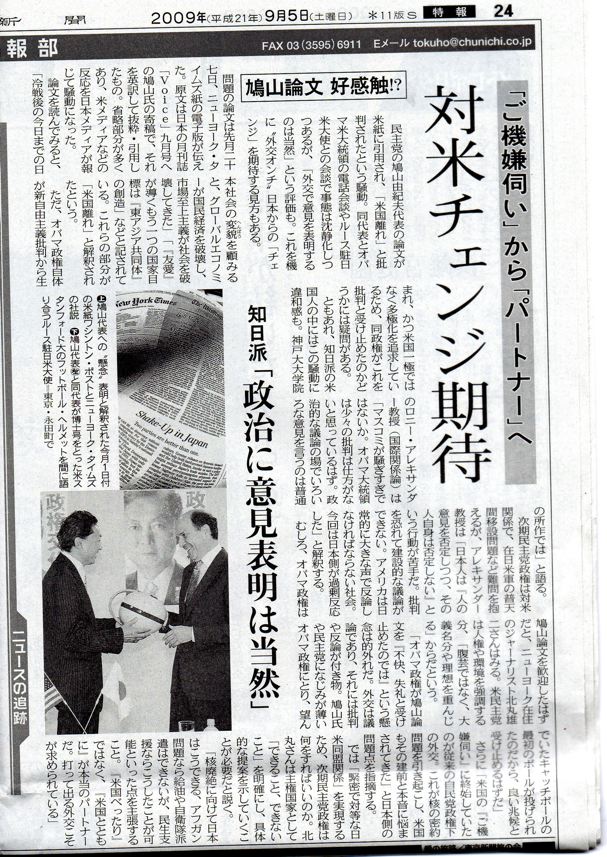
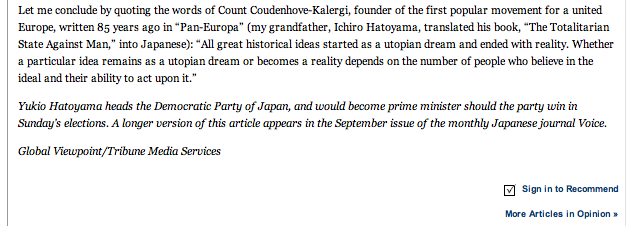
もっとも、(前エントリーでも書きましたが)電子版でも「オプ・エド」という投稿ページでの掲載でしたから、鳩山氏の「寄稿」と勘違いするのもそう非難できません。でもなんだか変だった。なんでまたこんな時期(選挙直前の8月27日付)に唐突にこんなものをNYタイムズなんかに“寄稿”したのか意味がわからなかったからです。さらにおかしなことに、文末に「 Global Viewpoint/Tribune Media Service」と付記があった。これは通信社の配信を示唆します。テキストの冒頭には確かに「By Yukio Hatoyama」とあったが、それは筆者名のことであって寄稿ではないのではないか、と気づくべきでした。まあ、批判のネタを見つけたと気が急いたのでしょう。
とにかくあの“寄稿文”、NYタイムズの体裁では著者が By Yukio Hatoyama ってなってて、しかもOP-ED(opposite editorial page)っていう普通は寄稿などを載せるページに掲載してあるから、最初に報じた毎日が「鳩山側が寄稿した」ってとるのはまあ、宜なるかな、なんですがね、しかし、そういう寄稿文にしては不思議なことに、最後に「Global Viewpoint/Tribune Media Service」って添え書きがあるんですわ。これ、普通、コピーライトとか書き添える位置なんです。
ですから、私としては、この、何気なく付記されている「Tribune Media Servise」がサービス(仲介)したんじゃないのかね、って思ってる。鳩山論文の英文はもともとあるわけだから、それをトリビューンの部局が鳩山事務所の了解を取るか取らずか、これは重要ってことで配信頒布した。で、トリビューンかNYタイムズが(読売は「同紙」って書いてたけど、わたしとしてはトリビューンが配信してるならふつうは前者だろうなあと思う)字数の関係でずいぶんと端折って(じゃっかん、英単語の入れ替えもあるようだけど)、アメリカに関係する議論のありそうな部分だけを抜粋した。鳩山事務所としてはそこまで明確に抜粋引用の条件を提示していなかった(これは甘いけどね)、って感じなのではないのだろうか?
しかし、それにしても、NYタイムズが「By Yukio Hatoyama」として彼が直接寄稿したような体裁にしたのは、これはほんと、まずいと思う。 それも、最後の「Global Viewpoint/Tribune Media Service」の付記を、何の説明もしていないというのも、姑息な感を否めない。それとも、こういうの、今までたくさんやっていて、慣例になっていることで、わたしがたまたま見逃し続けていたってことだけの話なのかもしれないですが。
Finally tonight as promised, a Special Comment on the passage, last week, of Proposition Eight in California, which rescinded the right of same-sex couples to marry, and tilted the balance on this issue, from coast to coast.
Some parameters, as preface. This isn't about yelling, and this isn't about politics, and this isn't really just about Prop-8. And I don't have a personal investment in this: I'm not gay, I had to strain to think of one member of even my very extended family who is, I have no personal stories of close friends or colleagues fighting the prejudice that still pervades their lives.
And yet to me this vote is horrible. Horrible. Because this isn't about yelling, and this isn't about politics. This is about the human heart, and if that sounds corny, so be it.
If you voted for this Proposition or support those who did or the sentiment they expressed, I have some questions, because, truly, I do not understand. Why does this matter to you? What is it to you? In a time of impermanence and fly-by-night relationships, these people over here want the same chance at permanence and happiness that is your option. They don't want to deny you yours. They don't want to take anything away from you. They want what you want—a chance to be a little less alone in the world.
Only now you are saying to them—no. You can't have it on these terms. Maybe something similar. If they behave. If they don't cause too much trouble. You'll even give them all the same legal rights—even as you're taking away the legal right, which they already had. A world around them, still anchored in love and marriage, and you are saying, no, you can't marry. What if somebody passed a law that said you couldn't marry?
I keep hearing this term "re-defining" marriage. If this country hadn't re-defined marriage, black people still couldn't marry white people. Sixteen states had laws on the books which made that illegal in 1967. 1967.
The parents of the President-Elect of the United States couldn't have married in nearly one third of the states of the country their son grew up to lead. But it's worse than that. If this country had not "re-defined" marriage, some black people still couldn't marry black people. It is one of the most overlooked and cruelest parts of our sad story of slavery. Marriages were not legally recognized, if the people were slaves. Since slaves were property, they could not legally be husband and wife, or mother and child. Their marriage vows were different: not "Until Death, Do You Part," but "Until Death or Distance, Do You Part." Marriages among slaves were not legally recognized.
You know, just like marriages today in California are not legally recognized, if the people are gay.
そう、ちょうど、カリフォルニアの結婚が今日、もしゲイならば、法的に認められなくなったのと同じです。
And uncountable in our history are the number of men and women, forced by society into marrying the opposite sex, in sham marriages, or marriages of convenience, or just marriages of not knowing, centuries of men and women who have lived their lives in shame and unhappiness, and who have, through a lie to themselves or others, broken countless other lives, of spouses and children, all because we said a man couldn't marry another man, or a woman couldn't marry another woman. The sanctity of marriage.
What is this, to you? Nobody is asking you to embrace their expression of love. But don't you, as human beings, have to embrace... that love? The world is barren enough.
It is stacked against love, and against hope, and against those very few and precious emotions that enable us to go forward. Your marriage only stands a 50-50 chance of lasting, no matter how much you feel and how hard you work.
And here are people overjoyed at the prospect of just that chance, and that work, just for the hope of having that feeling. With so much hate in the world, with so much meaningless division, and people pitted against people for no good reason, this is what your religion tells you to do? With your experience of life and this world and all its sadnesses, this is what your conscience tells you to do?
With your knowledge that life, with endless vigor, seems to tilt the playing field on which we all live, in favor of unhappiness and hate... this is what your heart tells you to do? You want to sanctify marriage? You want to honor your God and the universal love you believe he represents? Then Spread happiness—this tiny, symbolic, semantical grain of happiness—share it with all those who seek it. Quote me anything from your religious leader or book of choice telling you to stand against this. And then tell me how you can believe both that statement and another statement, another one which reads only "do unto others as you would have them do unto you."
You are asked now, by your country, and perhaps by your creator, to stand on one side or another. You are asked now to stand, not on a question of politics, not on a question of religion, not on a question of gay or straight. You are asked now to stand, on a question of love. All you need do is stand, and let the tiny ember of love meet its own fate.
You don't have to help it, you don't have it applaud it, you don't have to fight for it. Just don't put it out. Just don't extinguish it. Because while it may at first look like that love is between two people you don't know and you don't understand and maybe you don't even want to know. It is, in fact, the ember of your love, for your fellow person just because this is the only world we have. And the other guy counts, too.
This is the second time in ten days I find myself concluding by turning to, of all things, the closing plea for mercy by Clarence Darrow in a murder trial.
But what he said, fits what is really at the heart of this:
しかし彼の言ったことは、この問題の核心にじつにふさわしい。
"I was reading last night of the aspiration of the old Persian poet, Omar-Khayyam," he told the judge. It appealed to me as the highest that I can vision. I wish it was in my heart, and I wish it was in the hearts of all: So I be written in the Book of Love; I do not care about that Book above. Erase my name, or write it as you will, So I be written in the Book of Love."
彼は裁判官に向かってこう言っています。「わたしは昨晩、昔のペルシャの詩人オマル・ハイヤームの強い願いについて読んでいました」と。「それはわたしの想像しうる至高の希求としてわたしに訴えかけてきました。それがわたしの心の中にあったなら、そしてそれがすべての人々の心の中にもあったならと願わざるを得ません。彼はこう書いています;故に、我が名は愛の書物(the Book of Love)の中に刻みたまえ。あの天上の記録(Book above)のことは関知せず。我が名が消されようが、好きに書かれようが、ただしこの愛の書物の中にこそは、我が名を記したまえ」
その膝を打ったことはあとで述べますので、まずは次のクリップを見てくださいな。
これは「2人の父親 Twee Vaders」ってタイトルの歌です。
どうもオランダのテレビ番組らしく、毎回、このKinderen voor Kinderen(子供たちのための子供たち?)という子供たちのグループが、いろんなメッセージソングを作って歌う番組らしい。
さて、この歌詞の3番に、学校でおそらく浜田のようなガキどもから「あいつらホモだろ」といじられた主人公の少年が、「It's not ordinary」と述懐する部分があります。「But for me, it's quite ok」(でもぼくにとっちゃそんなのぜんぜんオッケーさ)と。
このオーディナリー、「それって普通じゃないけれど」と訳すとうまく伝えきれないものがあります。「普通」という言葉だと、多数決に基づく「正常さ、標準さ、規範的さ=ノーマル」という意味にもとられてしまうので。
で、ここはordinaryですので、日本語では「よくあること」と訳したほうがニュアンスが近い。
で、「はたと膝を打った」のは何かというと、父親が2人いることは「It's not ordinary」と歌うのを聞いてて、ああ、これ、使えるかも、と、さきほどの「ノーマル」に対比して思ったということなのです。
**
Q We're out of time, but a couple of issues I want to raise with you. Your daughter Mary, she's pregnant. All of us are happy. She's going to have a baby. You're going to have another grandchild. Some of the -- some critics, though, are suggesting, for example, a statement from someone representing Focus on the Family:
"Mary Cheney's pregnancy raises the question of what's best for children. Just because it's possible to conceive a child outside of the relationship of a married mother and father, doesn't mean it's best for the child."
(Q;もう時間がないんですが、もう1つ2つお訊きしたい。あなたの娘さん、メアリーのことです。妊娠なさった。とてもうれしいことです。赤ん坊が生まれるんですからね。あなたにまたお孫さんができるわけです。ただ、批判する人も、まあ、何人かいて、例えばですね「家族の価値」を標榜する代表者なんかからは「メアリー・チェイニーの妊娠は子供たちにとって何が最良なのかという問いを提起している」と声明を出したりしています。つまり結婚している母親と父親の関係の外で子供が生まれてもいいと思われたりして、それは子供にとってベストなことではない、と)
Do you want to respond to that?
(そういう発言について何か言いたいですか?)
THE VICE PRESIDENT: No, I don't.
(副大統領;いや、言うことはない)
Q She's obviously a good daughter --
(もちろんとても素晴らしい娘さんで……)
THE VICE PRESIDENT: I'm delighted -- I'm delighted I'm about to have a sixth grandchild, Wolf, and obviously think the world of both of my daughters and all of my grandchildren. And I think, frankly, you're out of line with that question.
(遮るように=筆者註)(うれしいことだ……6人目の孫が生まれようとしてるのだから、それはうれしいことだ、ウルフ、それにもちろん、娘2人の世界のことや私の孫たちみんなのことを考えるとね。で、思うに、率直に言えば、きみのその質問はルール違反だ)
Q I think all of us appreciate --
(たじたじになって)(いや、みんな評価すると思いますが、その……)
THE VICE PRESIDENT: I think you're out of -- I think you're out of line with that question.
(きみは論点から……その質問は、論点から逸れていて訊くべきことではないと思う)
Q -- your daughter. We like your daughters. Believe me, I'm very, very sympathetic to Liz and to Mary. I like them both. That was just a question that's come up and it's a responsible, fair question.
(しどろもどろ状態で)(あなたの娘さん、あなたの娘さんたちを気にかけているのです。私を知ってるでしょう、私はリズにもメアリーにも、とても、とても同情的だ。2人とも大好きです。これはただのふつうの質問ですよ。ふつうに頭に浮かんだ質問。それを責任をもって公正に質問しているのです。
THE VICE PRESIDENT: I just fundamentally disagree with your perspective.
(わたしは基本的に、そのきみの考え方には同意しない)
**
以上。そんなけ。
すごいでしょ。はは。
この"out of line"というのは、「線を越えてる」「はみ出している」「出過ぎだ」「分(ぶ)をわきまえない」「常軌を逸している」「規則違反だ」っていう、かなりきつい意味の婉曲な言い回しですわな。つまりね、ほんとはチェイニー、「たわごとだ」「何を言ってるんだ、バカ」「言って良いことと悪いことがあるぞ」という脅しをしてるわけです。脅し。でも、本質は何かというと、このおやじ、逃げてるんだ。都合が悪くなるとこうして脅して逃げる。
フセインの処刑を報じるCNNが、awaiting the first picture of the excution released というテロップを映しながら中継をしていた。アンダーソン・クーパーが「手に入り次第、お見せします。もちろん局内で内容を検討した上、事前に警告もおこなってから放送します」といっていた。見せねばならないんだろうな。
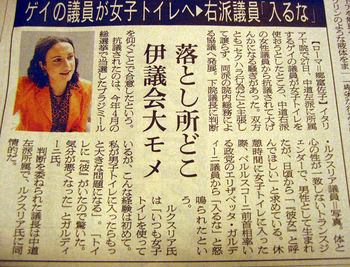
英語版のウィキペディアでも以下の通りです。
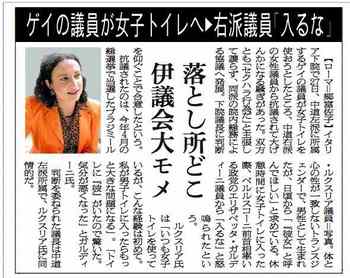
「Luxuria identifies using the English word "transgender" and prefers feminine pronouns, titles, and adjectives.」
(http://en.wikipedia.org/wiki/Vladimir_Luxuria)
「英語でのトランスジェンダーという言葉を使って自分をアイデンティファイしている」、つまり、自分はトランスジェンダーだと言っているわけです。
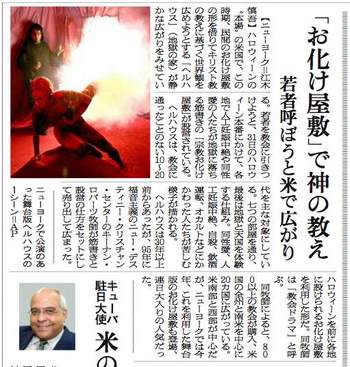
NYタイムズの劇評(10/14付け)は「Obviously, “Hell House” is a bring-your-own-irony sort of affair.(言うまでもなく、「ヘルハウス」は自らこの劇の皮肉を気づくためのもの)」と結んでいます。まあふつうそうでしょう。これで信仰に帰依しちゃうようなナイーヴなひとはとてもニューヨークでは生きていけないもの。ちなみにこの劇団、例のトム・クルーズの没頭する変形キリスト教集団「サイエントロジー」をおちょくった「A Very Merry Unauthorized Children’s Scientology Pageant」なんて劇をやってたりするようなところですし。
ってわけで、次にコピペするのがこれに対するわたしの2信。でもいまその自分のを読み直して気づいたけど、「ゲイと自称」じゃなくてこの広報部の返事には「ゲイであることを公表」って書いてあるわい。つまりこれ、ひょっとして「カムアウト」の意味の誤解かな? She came out ってののcome outを「ゲイであることを公表する」って辞書に書いてある意味のまま理解したのかしら? トランスジェンダーとしてカムアウトしてるのかもしれないのに。だとしたら大ボケだ。
まさか「She has already come out」という英文テキストを「本人がゲイであることを公表している」と理解した誤解、誤読、誤訳ではないでしょうね?
もし上記のような文だったならば、「She came out as gay」と「She came out as transgender」との2つの可能性があるのです。
彼女は「ゲイ」(イタリア語で何というのか知りませんけれど)と「自称」しているのでしょうか?(もっとも、英語で「She came out as gay」といったら先のメールでも触れたとおりレズビアンのことになりますが)。
(ところで「hold your hand」の「hold」、日本語にならないって書いてて気づきました。握るのともちょっとちがう=ちなみに握手の英語はshakehandsで、これは取った手を揺する行為を指した言葉。Hold は「つなぐ」でも「取る」でもない、「保持する」って感じね。大和言葉、なし、ってホントかよ)
あの激しい雷雨で山手線がスットップしていたこともあり、今年は参加者の激減が危惧されました。ですがあの雨の中、それでも昨年とほぼ同じ2292人が出発地点の代々木公園に集合し、予定の15分遅れで行進が開始となりました。雨は不思議と止んだのでした。沿道からの応援やイベント会場の参加者を合わせると私たちの数は計3800人にもなりました(デモ行進扱いのマーチは、東京では3000人を超える行進者は認められないようです)。東京ばかりではなく、みんなこの日のために全国から集まってくれた人たちです。ゲイとかレズビアンとか単純にカテゴライズされるけれど、中には学校の先生がおり、医師や看護師、ソーシャルワーカーなどのグループもいました。HIV/AIDSの支援団体の人もいれば、会社員も弁護士も会計士もコンピューター技術者もフリーターも学生も、それにメディアで働くゲイやレズビアンも参加してくれました。日本で初めて政治家としてレズビアンであることをカムアウトした尾辻かな子大阪府議会議員や、トランスセクシャルを公言する上川あや世田谷区議会議員も歩きました。社会民主党の保坂展人さんは国会議員として初めてこのマーチに参加してくれ、そのもようをご自身のブログでも公開してくれました(http://blog.goo.ne.jp/hosakanobuto/d/20060812)。事実上の同性婚を法的に保障している英国のロンドン市長ケン・リビングストン氏からは、このイベントは「日本のレズビアンやゲイの方々の貢献をたたえ、目下の課題である人権問題や法的平等を勝ち取るための戦いを知らしめる絶好の契機だ」(Tokyo Pride is a timely opportunity to celebrate the contribution of Japanese lesbian and gay people and to acknowledge their ongoing struggle for human rights and legal equality.)とのメッセージが寄せられました。その他にも多数の欧米の政治家、人権団体代表の方々からメッセージをもらいました。日本の政治家からは、上記御三方以外のものは、ありませんでした。
あの激しい雷雨で山手線がスットップしていたこともあり、今年は参加者の減少が予想されました。が、それでも昨年とほぼ同じ2292人が行進し、沿道からの応援やイベント会場の参加者を合わせるとその数は計3800人にもなりました。東京ばかりではなく、この日のために全国から集まってくれた人たちです。中には学校の先生がおり、医師や看護師、ソーシャルワーカーなどのグループもいました。HIV/AIDSの支援団体の人もいれば、会社員も弁護士も会計士もコンピューター技術者もフリーターも学生も、それにメディアで働くゲイやレズビアンも参加してくれました。日本で初めて政治家としてレズビアンであることをカムアウトした尾辻かな子大阪府議会議員や、トランスセクシャルを公言する上川あや世田谷区議会議員も歩きました。事実上の同性婚を法的に保障している英国のロンドン市長ケン・リビングストン氏からは、このイベントは「日本のレズビアンやゲイの方々の貢献をたたえ、目下の課題である人権問題や法的平等を勝ち取るための戦いを知らしめる絶好の契機だ」(Tokyo Pride is a timely opportunity to celebrate the contribution of Japanese lesbian and gay people and to acknowledge their ongoing struggle for human rights and legal equality.)とのメッセージが寄せられました。その他にも多数の欧米の政治家、人権団体代表の方々からメッセージをもらいました。尾辻、上川両氏以外の日本の政治家からは、ありませんでしたが。
サンディエゴの市長ジェリー・サンダーズは、すぐさま次のようなスピーチを行いました。
「こんな下劣な犯罪を行うような輩に、あるいはこんなふうに人間を襲撃しようと企てているような連中に、言うべき言葉はわずかだ。きみたちは卑怯者だ(You are cowards.)。犯人たちは3人をバットで殴りながらゲイに対する卑劣な罵倒語を浴びせかけていた。これはヘイトクライムの、まさに定義そのものの犯罪だ。あきらかに、このケモノたちは被害男性たちをまたクローゼットに押し戻したかったのだろう。わたしたちは、ぜったいに、そんなことをさせないし、許しもしない」
「Love is a Force of Nature」というのがこの物語の映画版のコピーだ。「愛とは自然の力」。a force of nature は抗し難い力、有無をいわせずすべてを押し流してしまうような圧倒的な力のことだ。「愛とはそんなにも自然で強力な生の奔流。だからそれに異を唱えることはむなしい」──そのメッセージ。
さらに寄付を集めて他の雑誌や新聞にも、同様の広告を打つようです。
で、コピーは
「We agree with everyone who named 'Brokeback Mountain' best picture」
「わたしたちは、ブロークバック・マウンテンを最優秀映画賞に決めたすべての人々に賛同します」
あるいはかねてから言われていたように、「ブロークバック」を、アカデミーの会員のご老人たちは観てもいないのではないか、という説。
アカデミーというのは映画に関係するすべての職業の人から構成されていて、現在の会員は6000人くらい。そのうち投票するのは4500人とか5000人なんですが、ほかの賞のグループ、監督協会とか評論家協会とかよりも高齢化が進んでいて、そこに候補作品のDVDが送られてくるという仕組みです。それで自分で見る。日本にも何人も会員はいて、そこに字幕付きのも送られてます。
だが、このカウボーイ同士のゲイの恋愛もの、そういうご年配の会員たちにとって、黙ってても観てくれる種類のものだろうかというと……。 「クラッシュは私たち自身が生きて働くこの業界をよく体現した映画だ( 'Crash' was far more representative of the our industry, of where we work and live)」とあるハリウッド関係者がNYタイムズの記事でコメントしています。対してブロークバックは「神聖なハリウッドのアイコン偶像に挑戦した、アカデミーのご年配方がそういうアメリカのカウボーイのイメージが壊れるのを観たいだろうかというと、答えは明らかだろう('Brokeback' took on a fairly sacred Hollywood icon, the cowboy, and I don't think the older members of the academy wanted to see the image of the American cowboy diminished.)」ということです。
脚本を書いたラリー・マクマートリーもまた「Perhaps the truth really is, Americans don't want cowboys to be gay,(きっと真実はたぶん本当に、アメリカ人はカウボーイがゲイであってはほしくないということなんだろう)」と「bittersweet」なオスカーの夜を振り返っています。
この雑誌は〈Read The Truth〉というコンセプトのもと、LGBTのセンスや視点で迫る野心的なカルチャー・マガジンです(とはいえ、一介の配本業者であるはずの東販、日販の強圧的な編集権介入的指導によって「ゲイ」という文字は表紙には出せず)。12月8日発売予定となる創刊号では、ご存知、お正月映画「僕の恋、彼の秘密」に主演するトニー・ヤンが表紙を飾るほか(彼はゲイ雑誌だと知っても表紙モデルを快諾したそうです)、新作『Confessions On A Dancefloor』がヒット中のマドンナにもロンドンでインタビューしました(マドンナは5日に来日予定。この「yes」のプロモートにも一役買ってくれるかもしれないとの思惑のもと、ひそかに戦略を画策中)。
- Special Feature:マドンナ・インタビューin London、カイリー・ミノーグ、ロビー・ウィリアムスほか
- 特集:「US LGBT TV最新事情 New Yorkルポ」
MTV、CBSとおなじバイアコムが今夏、初めて基本ケーブルサービスで設立したLGBT TV局「LOGO」。視聴世帯数1800万世帯までにぐんぐん成長しています。この設立までの道のりや、CNNでも活躍していた若手リポーターをメインキャスターに据えたLGBT関連専門ニュースチームの立ち上げをインタビューを交えて詳細にリポートしています。話題の番組コンテンツと合わせての紹介は、日本初のメディア露出です。
***
October 18, 2005
Editorial 社説
Pointless Provocation in Tokyo
東京での意味をなさない挑発行為
Fresh from an election that showcased him as a modernizing reformer, Prime Minister Junichiro Koizumi of Japan has now made a point of publicly embracing the worst traditions of Japanese militarism.
Yesterday he made a nationally televised visit to a memorial in central Tokyo called the Yasukuni Shrine. But Yasukuni is not merely a memorial to Japan's 2.5 million war dead.
The shrine and its accompanying museum promote an unapologetic view of Japan's atrocity-scarred rampages through Korea, much of China and Southeast Asia during the first few decades of the 20th century.
Among those memorialized and worshiped as deities in an annual festival beginning this week are 14 Class A war criminals who were tried, convicted and executed.
The shrine visit is a calculated affront to the descendants of those victimized by Japanese war crimes, as the leaders of China, Taiwan, South Korea and Singapore quickly made clear.
Mr. Koizumi clearly knew what he was doing. He has now visited the shrine in each of the last four years, brushing aside repeated protests by Asian diplomats and, this time, an adverse judgment from a Japanese court.
No one realistically worries about today's Japan re-embarking on the road of imperial conquest.
現実問題として、だれも日本が再び帝国主義的覇権の道を進むだろうなどとは心配していない。
But Japan, Asia's richest, most economically powerful and technologically advanced nation, is shedding some of the military and foreign policy restraints it has observed for the past 60 years.
This is exactly the wrong time to be stirring up nightmare memories among the neighbors. Such provocations seem particularly gratuitous in an era that has seen an economically booming China become Japan's most critical economic partner and its biggest geopolitical challenge.
Instead of appeasing this group, Mr. Koizumi needs to face them down, just as he successfully faced down the party reactionaries who opposed his postal privatization plan.
まだまだ「ネットワーク」を構成するに至るには時間がかかるかもしれませんが、こういうのは歴史ですから、拙速は目指しません。具体的な構想もまだですけれど、いま私のアタマの中にあるのは、日本ではLGBTの医療・社会福祉関係者のネットワークであるAGP(http://homepage2.nifty.com/AGP/)の活動とか、ひいては米国のThe National Lesbian & Gay Journalists Association(The National http://www.nlgja.org/index.html)に匹敵するようなものへの発展です。